
Cat With Mouth Open Breathing: When to Seek Emergency Care
A cat breathing with its mouth open usually isn’t getting enough oxygen, and the cause is often heart disease, asthma, fluid around the lungs, a respiratory infection, or an injury. Unlike dogs, cats rarely pant, so a cat with mouth open breathing should be treated as a potential emergency and seen by a veterinarian right away.
Cats are experts at hiding illness. By the time breathing trouble becomes visible, the underlying problem may already be advanced. At The Emergency Vets in Atlanta, GA, we often meet owners who spotted a cat with mouth open breathing at home and weren’t sure how worried to be. This guide walks through the most common reasons a cat breathes through its mouth, the rare situations when brief panting may be harmless, the warning signs that need immediate care, and what happens when your cat arrives at an emergency hospital.
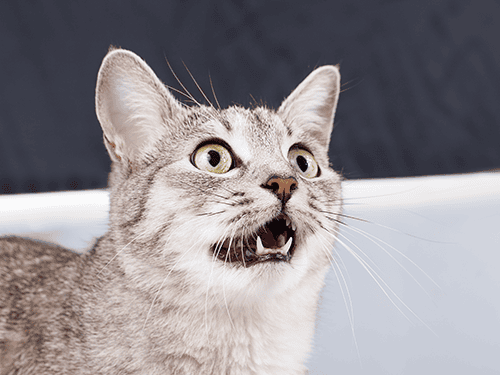
Why Is My Cat Breathing With His Mouth Open?
Open-mouth breathing in cats almost always means the body is working hard to pull in more air than the nose alone can deliver.
Healthy cats breathe quietly through their noses, even after a short burst of play. When a cat switches to mouth breathing, something is usually interfering with the lungs, heart, airways, or chest cavity. Veterinarians most often find one of these causes behind a cat with mouth open breathing:
- Heart disease: Hypertrophic cardiomyopathy and congestive heart failure can cause fluid to build up in or around the lungs.
- Feline asthma: Inflamed, narrowed airways make it hard for air to move in and out.
- Pleural effusion: Fluid collecting in the chest cavity squeezes the lungs and limits how far they can expand.
- Pneumonia or upper respiratory infections: Severe infections can inflame the lungs or block the nasal passages.
- Trauma: Falls, car accidents, and animal attacks can cause bleeding, bruised lungs, or air leaking into the chest.
- Airway obstructions: Swallowed objects, nasal polyps, or tumors can block normal airflow.
- Heatstroke: Cats left in hot cars or overheated rooms may pant as their bodies try to cool down.
Heart Disease Often Hides in Plain Sight
Heart disease is one of the most common reasons we see a cat with mouth open breathing, and many cats show no earlier symptoms. Hypertrophic cardiomyopathy thickens the heart muscle, which can lead to fluid backing up into the lungs. Some cats seem perfectly healthy until a stressful event, like a car ride or a new pet in the home, pushes a weakened heart past its limit.
Asthma and Allergic Airway Disease
Feline asthma tends to cause coughing spells that owners sometimes mistake for hairballs. During a severe attack, a cat may crouch low and extend its neck, and an asthmatic cat with mouth open breathing is struggling to move air. Dust, smoke, pollen, and scented litters are common triggers, and asthma attacks can become life-threatening without prompt veterinary treatment.
Is Open-Mouth Breathing in Cats Ever Normal?
Brief panting can occasionally happen in a healthy cat, but it’s far less common than in dogs and should never last long.
A young, healthy cat may pant briefly after an intense play session, during a stressful car ride, or on a very warm day. In these cases, the panting should stop within a few minutes once the cat rests in a calm, cool space. Even a brief episode of a cat with mouth open breathing is worth mentioning to your veterinarian, because some cats with early heart or lung disease first show symptoms during exertion.
How to Tell the Difference
Short-lived panting after obvious exertion is very different from a cat with mouth open breathing while resting, sleeping, or doing nothing strenuous at all. If the episode lasts more than a few minutes, keeps returning, or happens without a clear trigger, your cat needs to be seen right away. Older cats, cats with known heart murmurs, and cats with a history of asthma deserve extra caution because they have less reserve to cope with breathing problems.
Why Cats Mask Breathing Trouble
In the wild, showing weakness can make a cat a target, so cats instinctively hide discomfort. Many cats with breathing problems will simply sit still, hide under furniture, or stop grooming. By the time open-mouth breathing appears, a cat may already be struggling significantly. That’s why veterinarians consider a cat with mouth open breathing a true warning sign rather than a wait-and-see symptom.
Emergency Warning Signs That Need Immediate Care
Several breathing-related symptoms signal that your cat needs emergency treatment without delay.
A cat with mouth open breathing from respiratory distress often adopts a telltale posture and show changes you can spot from across the room. Head to an emergency vet immediately if your cat shows any of the following:
- Breathing with the mouth open while at rest
- Blue, purple, gray, or very pale gums or tongue
- Crouching with elbows pointed out and neck stretched forward
- Strong belly movements with each breath
- More than about 40 breaths per minute while sleeping or relaxed
- Crackling, wheezing, or noisy breathing sounds
- Sudden weakness, collapse, or refusal to move
- Crying out in pain along with cold, weak, or dragging back legs
Sudden Back Leg Paralysis and Breathing Trouble
When a cat with heart disease suddenly can’t use its back legs and cries in pain, a blood clot called a saddle thrombus may be the cause. Owners may first notice a cat with mouth open breathing and crying at the same time, because the condition is extremely painful. It requires emergency care right away.
Safe Transport Matters
Stress makes breathing problems worse for cats. Place your cat in a secure carrier with as little handling as possible and head directly to the hospital. Calling ahead lets the emergency team prepare oxygen support before you arrive.
What Happens When Your Cat Arrives at the Emergency Hospital
Emergency teams treat a struggling cat very gently, because stabilizing breathing comes before almost everything else.
A cat with mouth open breathing often goes straight into an oxygen cage on arrival. This calm, oxygen-rich space lets the cat rest while the veterinarian observes breathing patterns from a distance. Once the cat is stable enough to handle, the team begins looking for the cause. Common diagnostics include:
- Point-of-care ultrasound to check for fluid around the lungs or heart
- Chest X-rays to evaluate the lungs, heart size, and airways
- Bloodwork, including tests that can help screen for heart disease
- An echocardiogram to look closely at heart structure and function
- Fluid sampling from the chest, when present, to identify its source
How Treatment Is Tailored
Treatment depends on what’s causing the breathing difficulty. A cat in heart failure may need medications that help remove excess fluid. Cats with asthma often respond to medications that open the airways and reduce inflammation. When fluid fills the chest, a veterinarian may drain it to help the lungs expand. Your veterinarian will explain each step and recommend follow-up care once your cat is stable.
Because breathing emergencies can turn critical within minutes, having access to 24/7 emergency pet care gives your cat the best chance at a good outcome. The Emergency Vets team is ready at any hour to provide oxygen support and urgent diagnostics for cats in distress.
Breathing Emergency Care for Atlanta Cats, Day or Night
A cat with mouth open breathing is telling you something is wrong, even if the cause isn’t obvious yet. Heart disease, asthma, fluid in the chest, and injuries can all progress quickly, and early treatment often makes the difference. If your cat is panting at rest, breathing hard with its belly, or showing pale or bluish gums, there’s no reason to wait.
The Emergency Vets in Atlanta, GA, is open around the clock, including weekends and holidays, to care for any cat with mouth open breathing or other respiratory emergencies. Call us at (404) 371-9774 while you’re on the way, or bring your cat straight to our hospital. Our experienced emergency team will stabilize your cat, explain what we find, and guide you through the next steps with compassion and clear communication.
Recent Posts
About Us
At The Emergency Vets, we provide 24/7 emergency and critical care for pets at our animal hospital in Atlanta, GA. As the only privately owned emergency veterinary hospital in the metro area, we continue delivering trusted care with the same experienced team, now as an independent practice.