
Dog Stung by Bee: What to Do Immediately
If your dog gets stung by a bee, move your dog away from the insects, stay calm, and watch closely for signs of an allergic reaction such as facial swelling, hives, vomiting, weakness, or trouble breathing. Call your veterinarian for guidance, and head to an emergency vet right away if your dog was stung in the mouth or throat, was stung multiple times, or shows any signs of a severe reaction.
Curious noses and fast-moving paws make dogs natural targets for bees, wasps, and yellow jackets. Most stings cause only mild, short-lived discomfort, but some trigger serious allergic reactions that can become life-threatening within minutes. At The Emergency Vets in Atlanta, GA, we see a steady stream of sting cases from spring through fall. This guide explains what to do when you have a dog stung by a bee, how to tell a normal reaction from an allergic one, when to seek emergency care, and how veterinarians treat sting reactions.
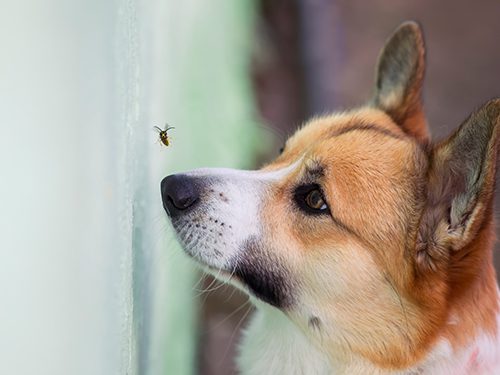
What to Do If Your Dog Gets Stung by a Bee
Your first priorities after a sting are protecting your dog from more stings and watching carefully for warning signs.
A dog stung by a bee often yelps, paws at its face, or suddenly licks or chews at a paw. Once you realize what happened, these steps help you respond safely:
- Calmly lead your dog away from the area so it isn’t stung again
- Note the time of the sting and, if possible, the type of insect involved
- Look for where the sting occurred, such as the face, mouth, paw, or body
- Watch your dog closely for the next several hours for any changes
- Call your veterinarian or The Emergency Vets to describe what happened
Check With a Veterinarian Before Giving Any Medication
Many owners have heard that over-the-counter antihistamines can help, but doses vary widely by weight, and some products contain added ingredients that are dangerous for dogs. Never give your dog human medication without speaking to a veterinarian first. A quick call allows the veterinary team to recommend the safest next step for your specific dog.
Why the Location of the Sting Matters
A sting on the paw or body is usually less concerning than one on the face, mouth, tongue, or throat. Swelling inside the mouth or around the airway can make breathing difficult. If your dog was stung by a bee in or near the mouth, treat it as an emergency, even if your dog seems fine at first.
Normal Sting Reaction or Allergic Reaction?
Most dogs experience a local reaction limited to the area around the sting, but some have a more widespread allergic response.
Knowing the difference helps you decide how quickly to act. A dog stung by a bee for the first time may react mildly, while another dog may react strongly after a single sting. There’s no reliable way to predict which response your dog will have, so careful observation in the first hour matters most.
Typical Local Reactions
A mild reaction usually stays close to the sting site. You may notice a small, red, swollen bump, along with licking, chewing, or pawing at the area. Signs of a mild reaction include:
- Localized swelling or a raised bump
- Redness or tenderness at the sting site
- Limping if the sting is on a paw
- Mild whining or restlessness
Even a mild reaction deserves monitoring, because swelling can sometimes spread over the next few hours. A dog stung by a bee that seems uncomfortable but otherwise normal should still be watched closely for the rest of the day.
Signs of an Allergic Reaction
An allergic reaction affects more than the sting site. Your dog’s face, muzzle, eyes, or ears may swell noticeably. Hives, which look like raised bumps under the fur, can appear across the body. Some dogs vomit, develop diarrhea, drool heavily, or become very itchy. These signs can develop within minutes or, less commonly, over a few hours.
Anaphylaxis: The Most Serious Response
Anaphylaxis is a severe, whole-body allergic reaction that can lead to shock. A dog in anaphylaxis may have pale gums, a weak pulse, sudden weakness, labored breathing, or collapse. This is a life-threatening emergency that requires immediate veterinary treatment. If a dog was stung by a bee, anaphylaxis often develops within 15 to 30 minutes, which leaves very little time to spare.
When a Bee Sting Becomes an Emergency
Certain symptoms and situations mean a dog stung by a bee needs to see an emergency veterinarian right away.
Don’t wait to see whether symptoms improve if you notice any of the following:
- Swelling of the face, muzzle, tongue, or throat
- Difficulty breathing, wheezing, or noisy breathing
- Hives spreading across the body
- Vomiting or diarrhea after a sting
- Pale or gray gums
- Weakness, confusion, or collapse
- Multiple stings from a swarm or nest
- A sting inside the mouth or throat
Multiple Stings Carry Added Risk
Disturbing a hive or ground nest can result in dozens of stings at once. Even in dogs without allergies, a large amount of venom can cause serious problems, including damage to red blood cells, kidneys, and muscles. Yellow jackets, which often nest in the ground in Atlanta yards, can sting repeatedly. Any dog stung by bees or wasp swarms should be evaluated by a veterinarian immediately.
Dogs With a History of Reactions
If your dog has reacted to a sting before, future reactions may be stronger. Small dogs also face higher risk because the same amount of venom has a greater effect on a smaller body. Let your veterinary team know about any past sting reactions so they can plan accordingly. A dog stung by a bee more than once over its lifetime may react differently each time.
How Emergency Vets Treat Sting Reactions
Treatment depends on how severe the reaction is, and the emergency team works quickly to calm the allergic response and support breathing and circulation. Your veterinarian will examine your dog, check the sting site, and remove any stinger that remains in the skin. Dogs with mild to moderate reactions often receive injectable antihistamines and anti-inflammatory medications, followed by a period of observation. A dog stung by a bee that arrives with severe swelling or anaphylaxis may need epinephrine, oxygen therapy, IV fluids, and close monitoring in the hospital until their condition stabilizes.
Monitoring After Treatment
Some allergic reactions improve and then return hours later, so a dog stung by a bee isn’t always in the clear once the swelling goes down. That’s why veterinarians may keep a dog for observation or recommend a follow-up check. For dogs stung many times, bloodwork can help detect delayed effects on the kidneys or red blood cells.
Lowering the Chance of Future Stings
Keeping an eye on your dog around flowering plants, clover patches, and garbage cans can reduce the risk of stings. Regularly checking your yard for ground nests and hives also helps. If your dog has had a serious reaction before, ask your regular veterinarian about a plan for future stings.
Because sting reactions can escalate quickly, having access to 24/7 emergency pet care gives you peace of mind. The Emergency Vets team is ready day and night to treat allergic reactions and monitor dogs until they’re safely on the mend.
Prompt Sting Care for Atlanta Dogs
A dog stung by a bee may recover with nothing more than a sore spot, but some dogs develop swelling, hives, vomiting, or breathing trouble that needs immediate treatment. Knowing what to watch for, and when to stop watching and start driving, helps you protect your dog during the busy outdoor months.
The Emergency Vets in Atlanta, GA, is open around the clock, including weekends and holidays, to care for dogs with sting reactions and other emergencies. If your dog was stung and you’re concerned, call us at (404) 371-9774 or bring your dog straight to our hospital. Our experienced emergency team will assess the reaction, provide fast relief, and help your dog get back to enjoying time outdoors.
Recent Posts
About Us
At The Emergency Vets, we provide 24/7 emergency and critical care for pets at our animal hospital in Atlanta, GA. As the only privately owned emergency veterinary hospital in the metro area, we continue delivering trusted care with the same experienced team, now as an independent practice.