Early Signs of Dog Overheating to Watch For
You can tell a dog is overheating when it pants heavily and can’t seem to slow down, drools excessively, has bright red or dark gums, seeks shade, and moves slowly or stumbles. As dog overheating progresses toward heatstroke, you may see vomiting, diarrhea, confusion, collapse, or seizures. Heatstroke can damage organs within minutes, so any dog showing these signs needs emergency veterinary care right away.
Dogs don’t sweat the way people do. They rely mostly on panting and a small amount of heat release through their paw pads, which makes them far more vulnerable in hot, humid weather. At The Emergency Vets in Atlanta, GA, we treat heat-related emergencies every summer and well into the fall, when warm afternoons still catch owners off guard. This guide explains how to spot the early signs of dog overheating, when it becomes heatstroke, which dogs face the most risk, and how emergency veterinarians treat heat illness.
How to Tell If Your Dog Is Overheating
The earliest signs of dog overheating are often behavior and breathing changes that build gradually during play, walks, or time outdoors.
Most dogs will keep running, fetching, or exploring even when their bodies are struggling, so it’s up to owners to watch closely. Early warning signs include:
- Heavy, rapid panting that doesn’t ease with rest
- Thick, ropey drool or excessive salivation
- Bright red gums or tongue
- Seeking shade, cool floors, or lying down frequently
- Slowing down, lagging behind, or refusing to continue walking
- Skin that feels unusually hot to the touch
- Restlessness or a glassy, distracted look
Changes in Panting
Panting is normal after exercise, but the pattern matters. A dog cooling down normally will gradually slow its breathing after a few minutes of rest. A dog overheating may pant faster and louder, stretch its tongue far out of its mouth, or make raspy breathing sounds. If panting seems frantic or doesn’t settle, take it seriously.
Gum and Tongue Color
Healthy gums are usually a soft pink. Dog overheating often turns the gums and tongue bright red as blood vessels widen to release heat. As heat illness worsens, the gums may become dark red, purple, or gray, which signals that the body is struggling to deliver oxygen. Any gum color change during hot weather deserves immediate attention.
Subtle Behavior Shifts Owners Often Miss
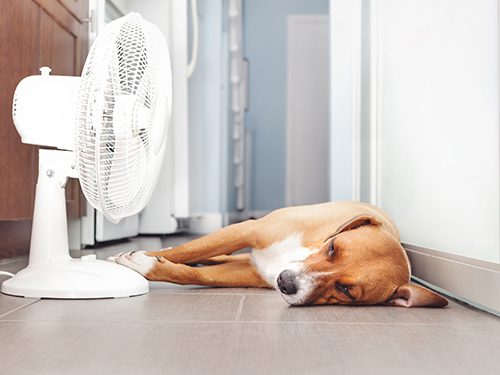
Not every dog shows dramatic symptoms early on. Some simply become quieter than usual, ignore commands, or stop responding to their favorite toy. Others dig at the ground looking for cooler soil, flatten themselves against tile, or repeatedly try to drink. These small changes can be the first hint of dog overheating, especially in high-energy dogs that normally never want to stop. If your dog’s behavior changes during warm weather, end the activity and watch closely for other signs. When in doubt, a quick call to an emergency vet can help you decide whether your dog needs to be seen.
When Dog Overheating Turns Into Heatstroke
Heatstroke happens when a dog’s body temperature rises so high that its natural cooling methods can no longer keep up.
A dog’s normal body temperature typically falls between about 101 and 102.5 degrees Fahrenheit. Temperatures above roughly 104 degrees are concerning, and temperatures near 106 degrees or higher can cause serious damage to the brain, kidneys, liver, intestines, and blood clotting system. Signs that dog overheating has progressed to heatstroke include:
- Vomiting or diarrhea, sometimes with blood
- Stumbling, wobbling, or appearing drunk
- Confusion, dullness, or unresponsiveness
- Dark red, purple, or gray gums
- Small bruises on the gums or belly
- Collapse or inability to stand
- Seizures
Why Recovery Can Be Deceptive
Some dogs seem to perk up after they’re out of the heat, leading owners to believe the danger has passed. Unfortunately, heatstroke can trigger problems that develop over the next 24 to 72 hours, including kidney injury, intestinal damage, and a serious clotting disorder. That’s why a veterinarian should examine any dog that showed signs of heatstroke, even if it appears to have recovered.
What to Do in the Moment
If you suspect dog overheating has become heatstroke, get your dog out of the heat and head to an emergency veterinarian immediately. Call ahead while you’re on the way so the team can prepare and offer guidance for the drive. Fast professional care offers the best chance at a full recovery.
Which Dogs Face the Greatest Risk?
Any dog can overheat, but certain breeds, ages, and health conditions make some dogs much more vulnerable.
Knowing whether your dog falls into a higher-risk group helps you plan outdoor time more carefully. Dogs at greater risk for dog overheating include:
- Flat-faced breeds such as Bulldogs, Pugs, Boston Terriers, Boxers, and Shih Tzus
- Dogs carrying extra weight
- Senior dogs and very young puppies
- Thick-coated breeds like Huskies, Chow Chows, and Newfoundlands
- Dogs with heart disease, collapsing trachea, or laryngeal paralysis
- Highly driven working and sporting dogs that won’t stop on their own
Atlanta’s Heat and Humidity
High humidity makes panting less effective, because moisture from the airways can’t evaporate as easily. That’s why dog overheating is a real concern in Atlanta even on days that don’t feel extreme. A temperature in the 80s paired with heavy humidity can be enough to overwhelm a vulnerable dog, especially during midday walks or outdoor play.
Common Situations That Lead to Heat Illness
Many heat emergencies happen during ordinary activities. Leaving a dog in a parked car, even with the windows cracked, can cause temperatures inside to climb dangerously within minutes. Long runs, games of fetch, hikes, and time on hot pavement or sand also contribute. Dogs left outdoors without shade or fresh water face an increased risk as well.
How Emergency Vets Treat Heat-Related Illness
Emergency treatment for heatstroke focuses on lowering body temperature in a controlled way while protecting the organs most affected by heat.
When an overheated dog arrives, the veterinary team checks body temperature, heart rate, breathing, and gum color right away. Cooling is performed carefully under monitoring, because cooling too fast or too far can cause new problems. IV fluids help support circulation and protect the kidneys, and oxygen therapy may be used if breathing is labored.
Monitoring for Hidden Complications
After the initial crisis, bloodwork and clotting tests help the team look for organ injury and bleeding problems. Many dogs with heatstroke are hospitalized for at least a day or two so veterinarians can watch for delayed complications, adjust treatment, and manage any seizures, intestinal damage, or kidney changes that develop.
Lowering the Risk in Hot Weather
Simple habits can go a long way in preventing dog overheating. Schedule walks for early morning or evening, provide shade and fresh water, avoid hot pavement, and never leave your dog in a parked car. Your regular veterinarian can help you plan safe activity levels for your dog’s breed, age, and health.
Because heat emergencies can happen any time of day, access to 24/7 emergency pet care is critical. The Emergency Vets team is ready around the clock to stabilize overheated dogs and monitor them closely through recovery.
Heat Emergency Care for Atlanta Dogs
Recognizing the early signs of dog overheating gives you the chance to act before heat illness becomes heatstroke. Heavy panting that won’t stop, thick drool, bright red gums, stumbling, and vomiting all signal that your dog needs help. Even if your dog seems to bounce back, a veterinary exam can catch hidden damage before it becomes serious.
The Emergency Vets in Atlanta, GA, is open day and night, including weekends and holidays, to treat heatstroke and other emergencies. If you’re worried about dog overheating, call us at (404) 371-9774 while you’re on the way, or bring your dog directly to our hospital. Our experienced emergency team will act quickly, explain each step of care, and help your dog cool down and recover safely.
Recent Posts
About Us
At The Emergency Vets, we provide 24/7 emergency and critical care for pets at our animal hospital in Atlanta, GA. As the only privately owned emergency veterinary hospital in the metro area, we continue delivering trusted care with the same experienced team, now as an independent practice.